Lightweight
With its low density and high strength-to-weight ratio, aluminium offers significant advantages in applications that require both light weight and durability.
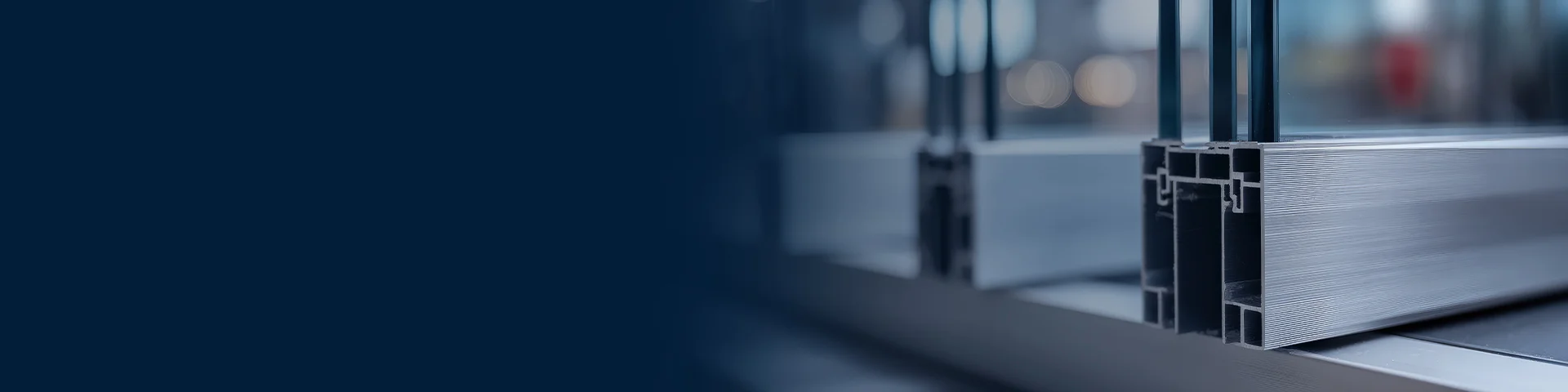
Aluminium is one of the most strategically important materials in modern manufacturing, thanks to its light weight, durability, formability and recyclability. Its outstanding physical and technical properties enable high-performance, long-lasting and sustainable solutions across a wide range of sectors, from architecture and automotive to energy and industrial applications.
With its low density and high strength-to-weight ratio, aluminium offers significant advantages in applications that require both light weight and durability.
Aluminium offers a long service life thanks to its high corrosion resistance and suitability for surface treatments. Anodising, painting and coating can further enhance its durability and appearance.
Aluminium can be readily processed through extrusion, forging, cutting, bending and other forming methods. This enables the manufacture of profiles and components tailored to the needs of different industries.
Aluminium can be recycled repeatedly while retaining much of its original quality. This makes it a valuable material for sustainable manufacturing and the circular economy.
Aluminium’s electrical and thermal conductivity makes it a widely used material in the energy, electrical and electronics sectors, as well as in applications requiring heat transfer.
Aluminium is used across numerous sectors, including architectural systems, automotive, aerospace, energy, transport and industrial applications. Key uses include window and door systems, façades, balcony glazing systems, office partitions, lifts, rails, vehicle bodywork, ventilation systems and standard profiles.